
Why is it so much easier to see others’ shortcomings
Parking is hardly ever convenient, and, in most cases, turns out to be a discouraging part of the driving experience. It seems to me that much of the problem is related to our obsession with comfort. We would like to park as close as possible to our destination, and so we invent ingenious ways of achieving that goal. In this respect, I’m just an average American driver.
A few years ago, my morning routine included a drive to the local post office, so I could have my mail early in the workday. Since quite a number of folks had the same idea, a small-scale traffic jam would occur almost daily in that two-block area. One morning, being in a bit of a hurry, I decided to use a vacant space, even though it had a sign that warned against parking in that spot. Those who dared to park there would not be tolerated, it warned. It was not like I would be there for any length of time. A couple of minutes was all I needed, so I pulled in. When I returned, the sky didn’t fall and no policeman carried me off to jail. Each day, it became much easier for me to revisit that same available spot, and I got a bit braver.
Things went along all right for almost a month, then one morning a stranger – someone I didn’t know – parked in my spot. Can you believe it? In my spot! Didn’t they read the sign? It states as plain as day that parking is not allowed. Now I’ll probably have to drive all over town just to find a place to park, and then I will have to walk back here. You can surely see how complicated my life gets when people aren’t considerate.
But through that experience – and others like it – I have learned one thing: It is easy for me to notice how other folks break the rules, or seem to. And all the while, I can hardly believe that I could be found guilty of some failure.
God warned us of this when he said that we all sin and come short of his plans for our life (Romans 3:23). His words are a bit stronger, as written by the Apostle John: “If we say we have no sin, we deceive ourselves" (I John 1:8).
You’re probably a lot like me. We know we have sinned; we just don’t want to talk about it. It is more pleasant to talk about the sins of someone else rather than our own. But God covers this scenario as well. Jesus indicates in John 8:7 that we should be extremely careful about casting a stone (pronouncing judgement), as long as we ourselves are guilty of sin. In the "Sermon on the Mount" (Matthew 7:3), he warns about noticing the speck that is in our brother’s eye, but at the same time being unaware of the log that is in our own.
I might notice another person bending the rule, breaking the law or committing a sin, but there is not a whole lot I can do about it. But what I do have control over is my bending, breaking and committing.
So the prayer I’ll be praying often this new year is this: "Lord help me to become more serious about noticing and correcting my failures, and less concerned about how someone else might not be measuring up to my standards."
That’s my prayer. What’s yours?
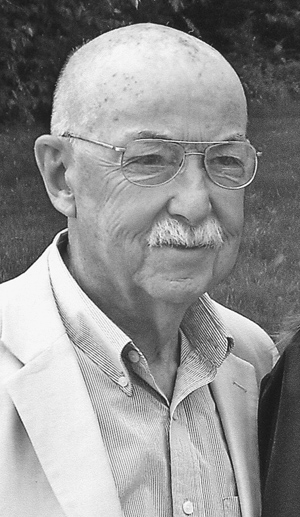
Rev. Norris Price First Baptist Church of Ramsey (Retired)

