
Early settlers in Fayette County
Fayette County was a veritable wilderness when white man first entered her dense forests and bewildering prairies.
Several old buffalo trails passed through the area, used by Indians and later by the trappers and surveyors as they headed inland.
Attracted by good land and plenty of it, families such as the Becks settled here. Paul Beck first located at the Riley Settlement in Bond County around 1805.
Having heard of a river to the east, he blazed a trail with an ox team from Greenville to Vandalia. The road he made is followed to some extent by Ill. Route 140 west of Vandalia. Stories tell that he camped under the river bluffs on the site of Vandalia during the winter of 1815.
The following year, Paul journeyed up river and found the Big Spring. Being welcomed by the neighboring Indians, his sons came soon after, and this family is credited with being the first white men to make a permanent settlement in what would become Fayette County.
Their group of cabins near the Big Spring was known as Beck’s settlement. A mill was operated here, but old timers said the water was usually too high or too low to make it efficient.
William Nichols settled with his family in Section 8 of Carson Township in about 1821.
As with Paul Beck, William was the head of his community, serving as justice of the peace.
Many of these settlements, including the Lorton Settlement on the banks of the Kaskaskia River, were comprised of extended families.
Robert Lorton’s Settlement was located near the site of present-day Cowden and he, too, lived among the Kickapoo Indians along the banks of the Kaskaskia River, known by the Indians as the Raccoon River.
Haley’s Settlement, mentioned in the report of the County Commissioners of June 1821, was located east of Bluff City, near present Haley Chapel Methodist Church.
The survey team for the National Road found John Haley living 300 chains north of their route for the road that would open America’s east with the west.
The Huffman Settlement, located on the creek of the same name in Sharon Township, was established by 1820.
The Schwarm Settlement in Lone Grove Township was one of the later to be settled, starting about 1840. One of the cabins from this settlement can be visited at Ingram’s Log Cabin village in Kinmundy.
In 1816, five families had settled on the prairie west of Vandalia in what is Bear Grove Township. This was part of the Great Prairie, which stretches from Sangamon County south, cutting a swath through Fayette County.
Dempsey Yarbrough was one of the first to homestead rhere, followed by Edward Davis, Joel Thomas, James Shrull and Akin Evans, our first county sheriff.
The Blankenship Settlement at Shobonier was active in 1833 when the Wetmore family came to the area. The collection of cabins around John and Elizabeth Wakefield’s log home in Otego Township was named after him. She was a Thompson daughter from Vandalia.
A chronicler of the Black Hawk War, Wakefield kept a grocery, which means that in addition to store goods, he also kept a barrel of whiskey.
Stories are told of visiting bands of Indians who would camp near the Wakefield Settlement to trade. They would barter skins for his whiskey, then terrify the women and children with their war whoops and antics.
The Hurricane Settlement stood just across the Montgomery County line near the present-day village of Vanburensburg. It was started in 1816 by a group of about 30 people from Bowling Green, Ky., whose family connection to surveyor Isaac Hill gave them early knowledge of the land.
Their first act was to form a church, and one of the first orders of business carried out by the church was to speak out against slavery.
An 1819 report to the Bond County Court reported “34 souls” living here. They, too, lived near some Indians – two, a man who was blind and his woman who did not speak our talk.
Indian Springs Golf Course on Ill. Route 185 could just as easy be named “Blind Indian Springs.”
The year 1830 saw the establishment of the settlement on Sugar Creek in Avena Township. Spurred by construction of the National Road, the first residents were workmen.
Four years later, a second migration from Ohio of the Logue, Workman and Owens families swelled the population.
A village was platted and named Howard’s Point for the Howard brothers who were the first to make a settlement. An inn was opened, then a mercantile that also housed a post office.
Henry Ebelmesser soon had a forge in operation and a school named “Frogpond” was built, followed by a church.
In a few short years, the settlement had become a viable community, not copied by many of our other early settlements.
The earliest proven settlement in Fayette County is none other than Vandalia, which was under the French name of “Vanne Delai” (water gate) in 1803 and “Vandla” in the hand of surveyor, Isaac Hill in the year 1810. .
On his map, Hill noted Vandalia’s first census – 1 Dutch; 4 British; 7 Savages.
Nearly 15 years later, William C. Greenup would enter the wilderness at the mandate of the legislature and plat a new state capitol near the site of this original settlement on the Kaskaskia River, naming it what else? Vandalia.
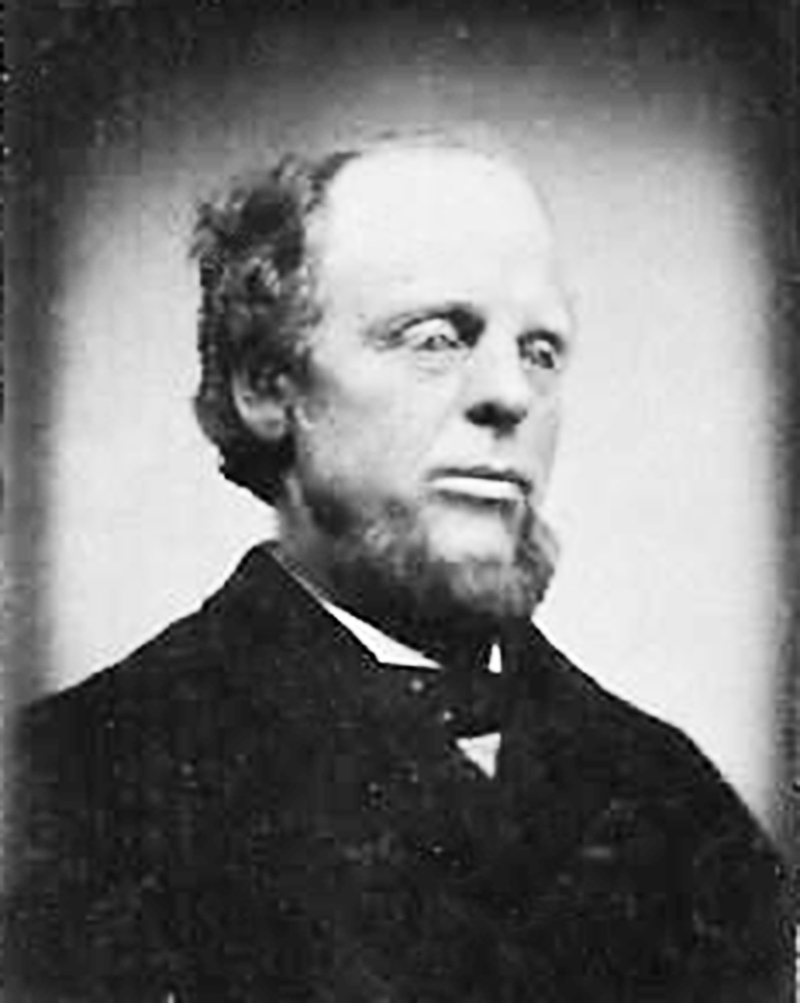
Demspey Yarbrough