‘It’s not a pretty sight’
It started out so well.
With unseasonably moderate weather early this year, most area farmers were able to get their crops in the ground by late March or early April.
Nobody could remember a year like it. Perhaps it was a bit odd, but the fields looked great. All signs pointed to a banner year, another bumper crop to match the past two.
But then the rains stopped.
“It’s not a pretty sight,” said Fayette County Farm Bureau Manager Ron Marshel. “It started out looking so good.
“But that potential has been slipping away in recent weeks. It makes you sick, knowing what we could have had and what we will have.”
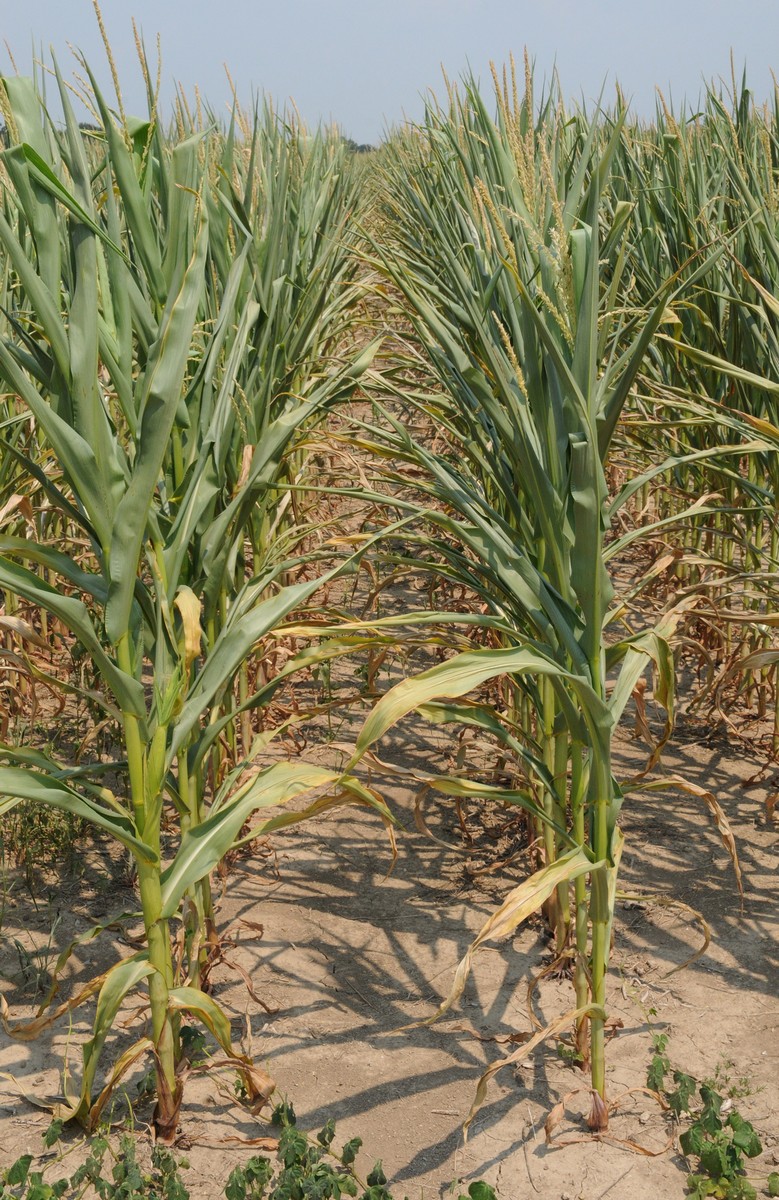
A survey of area fields on Monday showed corn under considerable stress. Early-planted fields had plants that were 5 to 6 feet tall, but their leaves were rolled up to conserve moisture. Many had tassled and silked, but the emerging ears weren’t getting properly pollinated – and thus, were unlikely to produce full ears.
“It’s amazing to see what the corn plants are doing to hold on,” said Keith Sanders, vice president of the Fayette County Farm Bureau, who joined Marshel on a trip past fields west of Vandalia on Monday.
“But some stalks aren’t even putting out shoots.
“If we would get rain now, we could get half a crop. Without rain, it will be zero,” Sanders said.
Fayette County is not alone in suffering through the drought. In fact, nearly 90 percent of Illinois is considered to be in some degree of drought, with conditions worsening from north to south.
According to the U.S. Drought Monitor, Northern Illinois is rated “abnormally dry,” Central Illinois, including Fayette County, is a “moderate drought” area and Southern Illinois is an “extreme drought” region. The only worse category of drought is “exceptional.”
Those designations were assigned a week ago, and are worsening as the hot, dry conditions persist.
“Some areas in deep Southern Illinois are just downright miserable,” Marshel said. “In those areas, it’s too late for the corn. It’s gone.”
Illinois corn conditions this week were rated at 12 percent very poor, 21 percent poor, 41 percent fair, 23 percent good and 3 percent excellent.
Beans are in somewhat better shape, though they, too, are dwarfed and are showing signs of stress.
Both men referred to the drought of 1983 as the last major drought to hit this area. Sanders said that yields then were dismal – 37 bushels per acre for corn and 13 bushels per acre for beans. Another drought year, they said, was 1954.
“They say that droughts run in 30-year cycles, so we’re about due,” Sanders said. “We have a lot better hybrids now than they did in ’83.
"But it’s going to have to be super corn to withstand what we’re facing now.”
Marshel concurred: “If these conditions existed 30 years ago, the corn crop would be gone. Due to improvements in the genetics, the corn is able to tolerate these conditions better.”
Last month was the fifth-driest June on record, with a statewide average of 1.6 inches of rain – which is 2.2 inches below normal. Reports indicate that each month this year has recorded above-normal temperatures and below-normal precipitation.
As of this week, statewide topsoil moisture is rated at 52 percent very short, 37 percent short and only 11 percent adequate.
Where does that leave the farmers financially? Most have some sort of crop insurance, Marshel said, but the amount varies.
The top policies available will pay about 85 percent of past years’ revenues, but others pay considerably less. A catastrophic policy would pay only the input expenses – seed, fertilizers and herbicides.
“It’s an individual farmer’s decision,” Marshel said. “And it varies all over the map.”
As the farmers brace for a tough year, one thing is clear – the impact of their harvest will trickle down through the rest of the local economy.
“We’re very much an ag-driven area,” Marshel said. “The fortunes of the farmers have a major impact on the entire economy.
“There’s also a definite trickle-down effect for the farmers – seed could be higher next year, hay will be higher because the pastures are drying up, feed prices will rise.”
Meanwhile, weather reports aren’t especially encouraging.
“The 25-day forecast isn’t calling for a whole lot of moisture,” Marshel said, “though there’s supposed to be a little break in the temperature this week. Through the month of July, there’s supposed to be more 100-degree days and low precipitation. Each day with conditions like that, it hurts the crops’ ability to bounce back.”

Keith Sanders (left), vice president of the Fayette County Farm Bureau Board of Directors, and Ron Marshel, Farm Bureau manager, check out the damage done by stress in an area cornfield.